
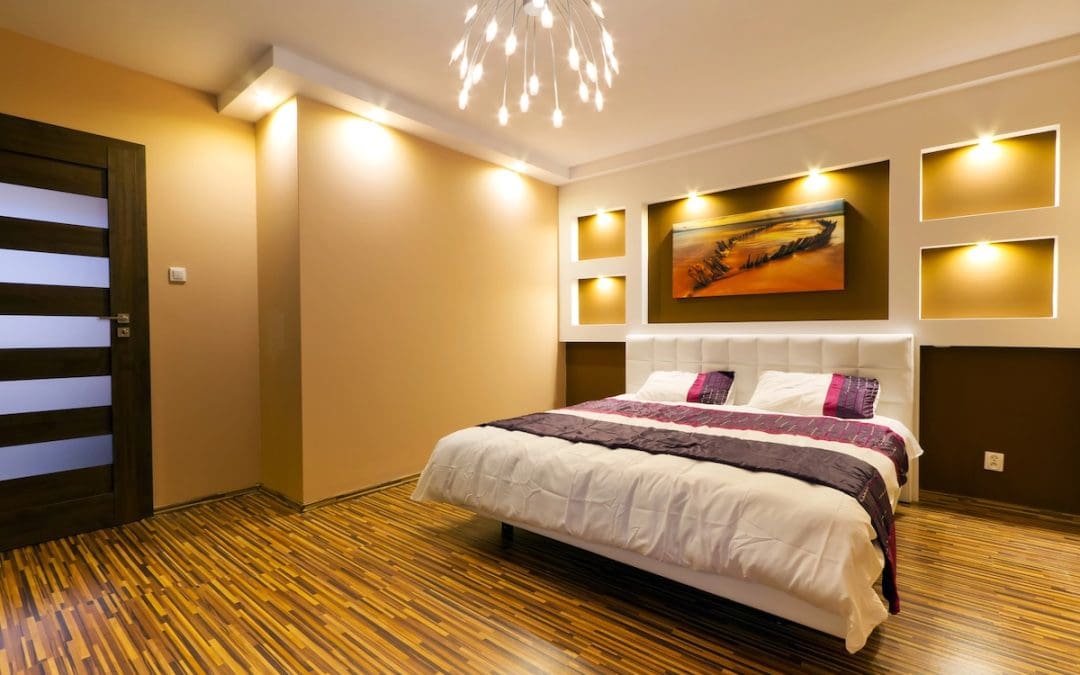
Most homeowners improve interior lighting by adding more of it: brighter bulbs, more fixtures, higher wattage. To improve interior lighting effectively is to understand that light shapes how a room feels, how large it seems, how warm it reads, how long people want to stay in it, and that the specific qualities of light matter as much as the quantity of it.
How to Improve Interior Lighting Through Placement and Purpose
Where light comes from determines the character of a room more than almost any other single factor. Light from above, the standard overhead fixture, illuminates floors and the tops of furniture while leaving walls in relative shadow, which produces the flat, institutional quality that makes even well-furnished rooms feel like waiting areas. To improve interior lighting through placement means redirecting light toward the walls. Table lamps, floor lamps, and sconces that wash light upward or outward rather than straight down create the reflected glow that makes a room feel larger and warmer simultaneously. The wall is the most underlit surface in most homes, and lighting it changes the room’s perceived dimensions without moving a single piece of furniture.
Layering Lighting at Different Heights
A room lit at only one height reads as one-dimensional regardless of how carefully it’s been decorated. Improving lighting through height layering, combining a ceiling source with mid-height table or floor lamps and low accent sources, creates the depth and visual interest that makes a room feel considered rather than assembled. Each height layer adds a different contribution: the ceiling source establishes general illumination, the mid-height lamps define zones and create conversational warmth, and the low accent sources add dimension and draw the eye through the space.
The Mood Connection Most People Miss
Light temperature, the warmth or coolness of the light source, has a direct and documented effect on how a space feels and how people behave in it. Cool white light in the 4000K and above range increases alertness and is appropriate for task-focused environments. Warm white light in the 2700K to 3000K range produces the relaxation response that makes a living room feel like somewhere to stay rather than somewhere to pass through. Most homes mix color temperatures across rooms without realizing it. A warm living room next to a cool hallway creates a jarring transition that registers as discomfort without the occupant being able to name why. Consistency is the key to creating a home that flows rather than conflicts.
Improve Interior Lighting Without Buying Anything New
Before purchasing new fixtures or bulbs, repositioning what’s already in the room is the lowest-cost way to improve interior lighting. A floor lamp moved from a corner to a position beside a chair creates a reading zone and washes the adjacent wall with light simultaneously. A table lamp relocated from a side table to a bookshelf illuminates the objects displayed there while adding an entirely different light source to the room’s composition. The lighting arrangement is rarely as fixed as most homeowners treat it.
A&D Home Inspection provides Home Inspections in Central Florida. Contact us to schedule an appointment.